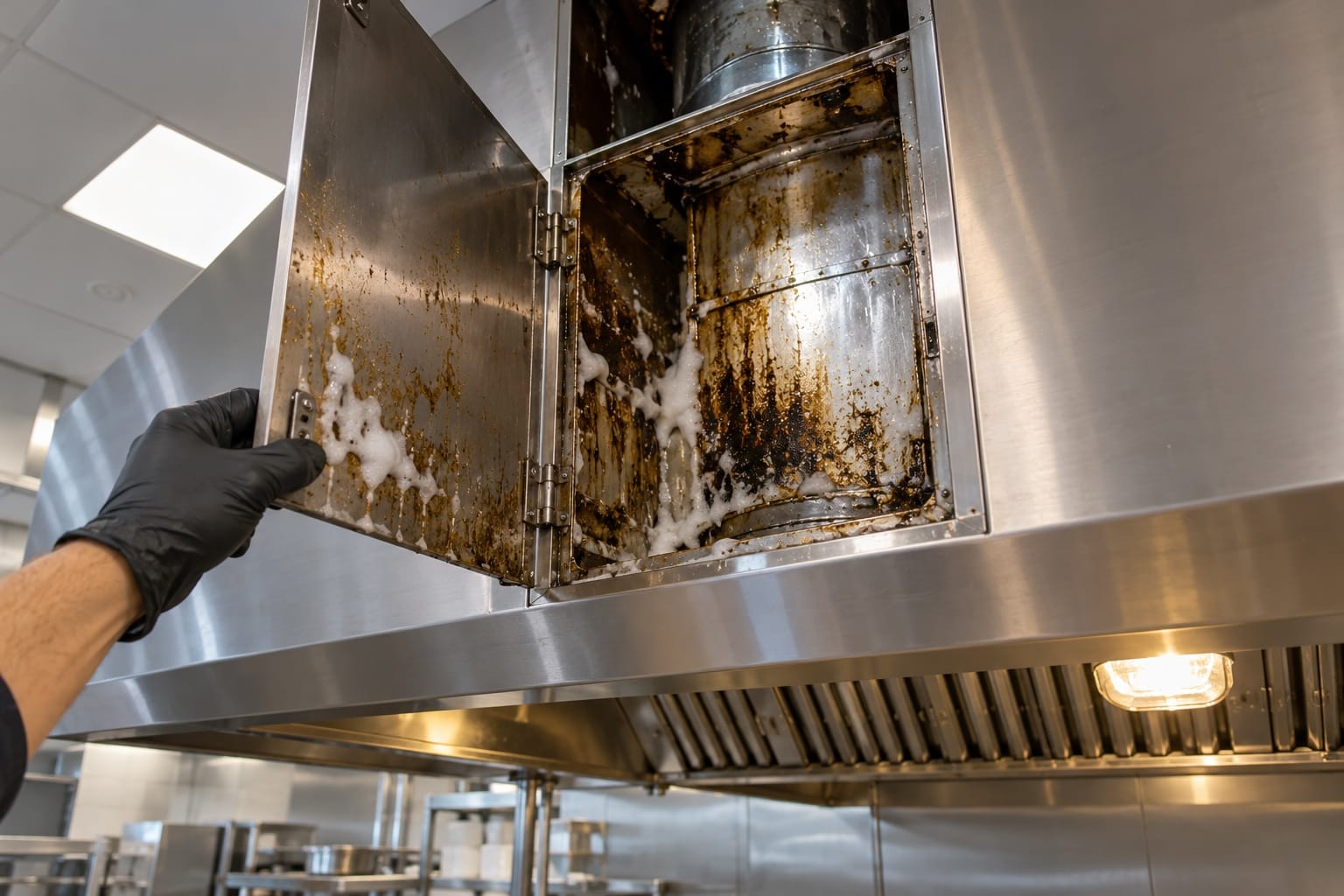
Health and fire inspections are a fact of running a restaurant, and the exhaust system is one of the first places an inspector looks. Grease is visible, it's a documented fire risk, and it's easy to check — which is exactly why a dirty hood or a packed duct run is one of the most common violations on the books. Here's what inspectors actually look for in your exhaust system, and how to make sure you're ready before they walk in.
What Inspectors Check in Your Exhaust System
Inspectors look at the whole ventilation path, not just the visible steel. They check the hood and the grease removal devices (the baffle filters) for visible buildup, they look at whether the filters are in place and in good condition, and they check the exhaust fan and the ductwork for signs of accumulated grease. A system that's been cleaned on a schedule looks different from one that's been wiped down on the surface — and inspectors can tell the difference.
The Documentation That Matters
Beyond the physical condition, inspectors and fire marshals want to see that the system is being maintained on a documented schedule. That means cleaning records: who cleaned the system, when, and what was cleaned. A written report from each service visit — covering the hood, filters, plenums, fan, and ductwork — is the paper trail that turns "we clean it" into "here's the proof." Many insurance carriers want the same documentation as a condition of coverage.
Common Exhaust Violations
The violations show up again and again: visible grease buildup on the hood or filters, missing or damaged baffle filters, uncleaned ductwork, and no records of cleaning. Each one is easy to prevent and easy to fix — but each one can also mean a failed inspection, a re-inspection fee, or worse. The kitchens that pass consistently are the ones that treat the exhaust system as a scheduled maintenance item, not an afterthought.
How to Be Ready Before They Walk In
Being ready isn't about a frantic clean the night before. It's a schedule that matches your cooking volume, a crew that documents every visit, and a system that's clean enough to inspect at any hour. We clean to NFPA 96 and local health department expectations, and every visit ends with a written report you can hand straight to your inspector. When the inspector walks in, the system is ready — and so is your paper trail.
Want to make sure your kitchen passes the next inspection? Call for a fast response and a free quote.