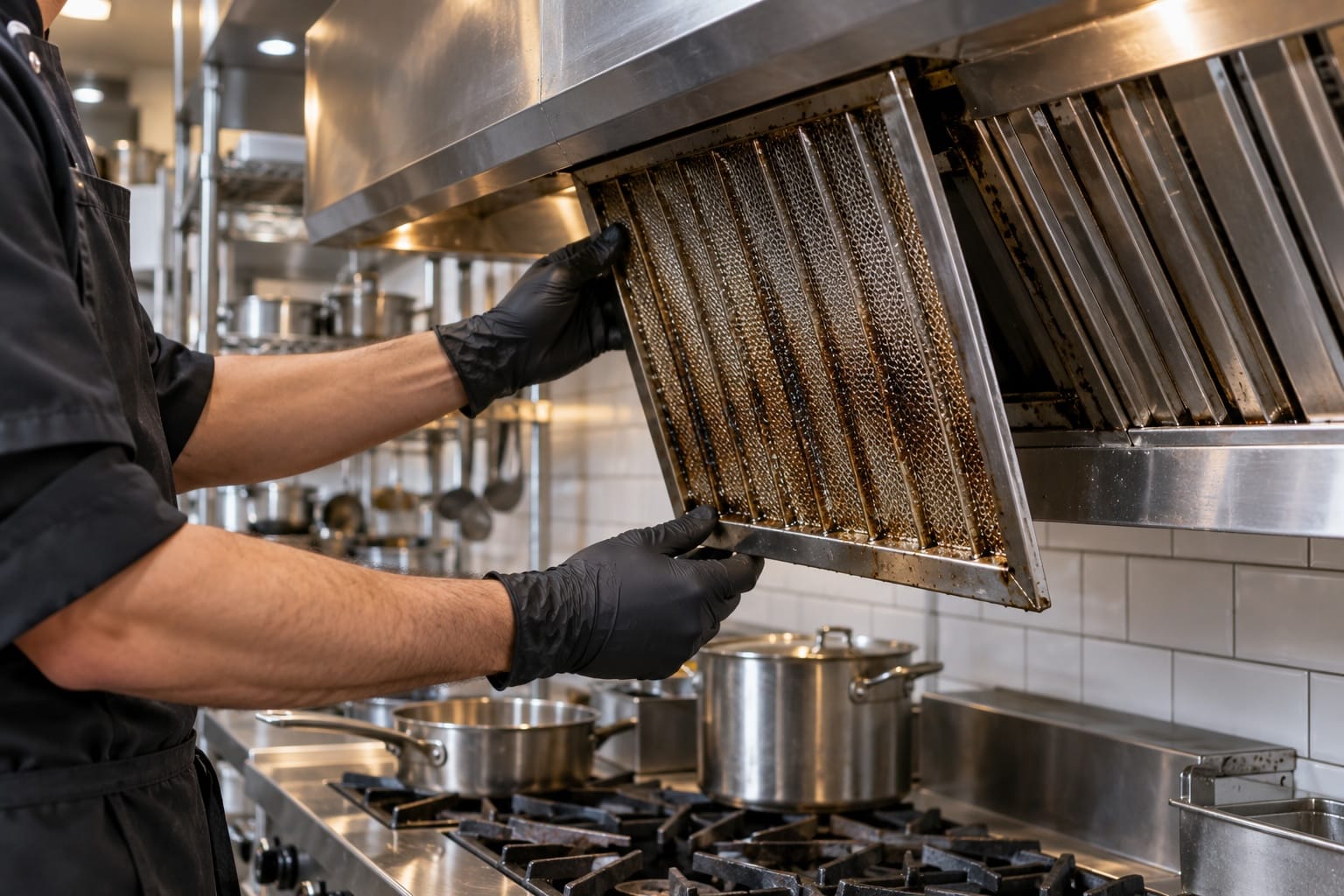
Grease fires are one of the leading causes of restaurant fires, and the exhaust system is where the fuel lives. Every time you cook, a film of grease settles on the hood, the filters, and the inside of the ductwork — and that film is exactly what a fire needs to spread fast. The good news is that grease fires are largely preventable. It comes down to a cleaning schedule that matches your cooking, filters that are maintained, and a crew that knows what it's looking at.
How Grease Fires Start
A fire needs three things: heat, oxygen, and fuel. In a commercial kitchen, the heat is everywhere — a hot surface, a spark, a flare-up from the cooking line. The fuel is the grease that builds up on surfaces and, critically, inside the exhaust system. When that buildup reaches a certain point, a small flare-up can ignite the grease in the hood or the ductwork, and a fire that should have stayed on the stove becomes a fire in the building's structure.
The Exhaust System's Role
The hood, the filters, the plenums, and the duct runs are designed to carry heat and smoke out of the kitchen — but they also carry grease. Over time, that grease accumulates inside the ductwork, where it's out of sight and out of mind. A duct full of grease is effectively a fuel line running through your building. That's why NFPA 96 and local codes require the entire exhaust path to be cleaned on a schedule, not just the parts you can see.
Prevention: The Schedule, the Filters, the System
Prevention is a system, not a single action. It starts with a cleaning schedule that matches your cooking volume — heavy and solid-fuel cooking needs the most frequent service. It includes keeping the baffle filters clean and in good condition, because filters that are clogged or missing let grease past them into the ductwork. And it includes a fire suppression system that's inspected and maintained, so that if a fire does start, it's contained fast.
What to Do If a Fire Starts
If a grease fire starts, the priorities are simple: the fire suppression system should activate automatically, staff should use the right extinguisher if it's safe to do so, everyone should evacuate, and 911 should be called. The time to think about this is before it happens — which is why staff training and a maintained suppression system matter as much as the cleaning schedule. A kitchen that's prepared handles a fire as a contained event, not a catastrophe.
The Real Cost of a Grease Fire
A grease fire can close a kitchen for days or weeks, cost thousands in damage and lost revenue, and raise insurance premiums for years. The alternative is a cleaning schedule that keeps the fuel out of the system in the first place. One scheduled visit costs less than any emergency callout — and far less than a fire you didn't plan for.
Ready to take grease off the table? Call for a fast response and a free quote.