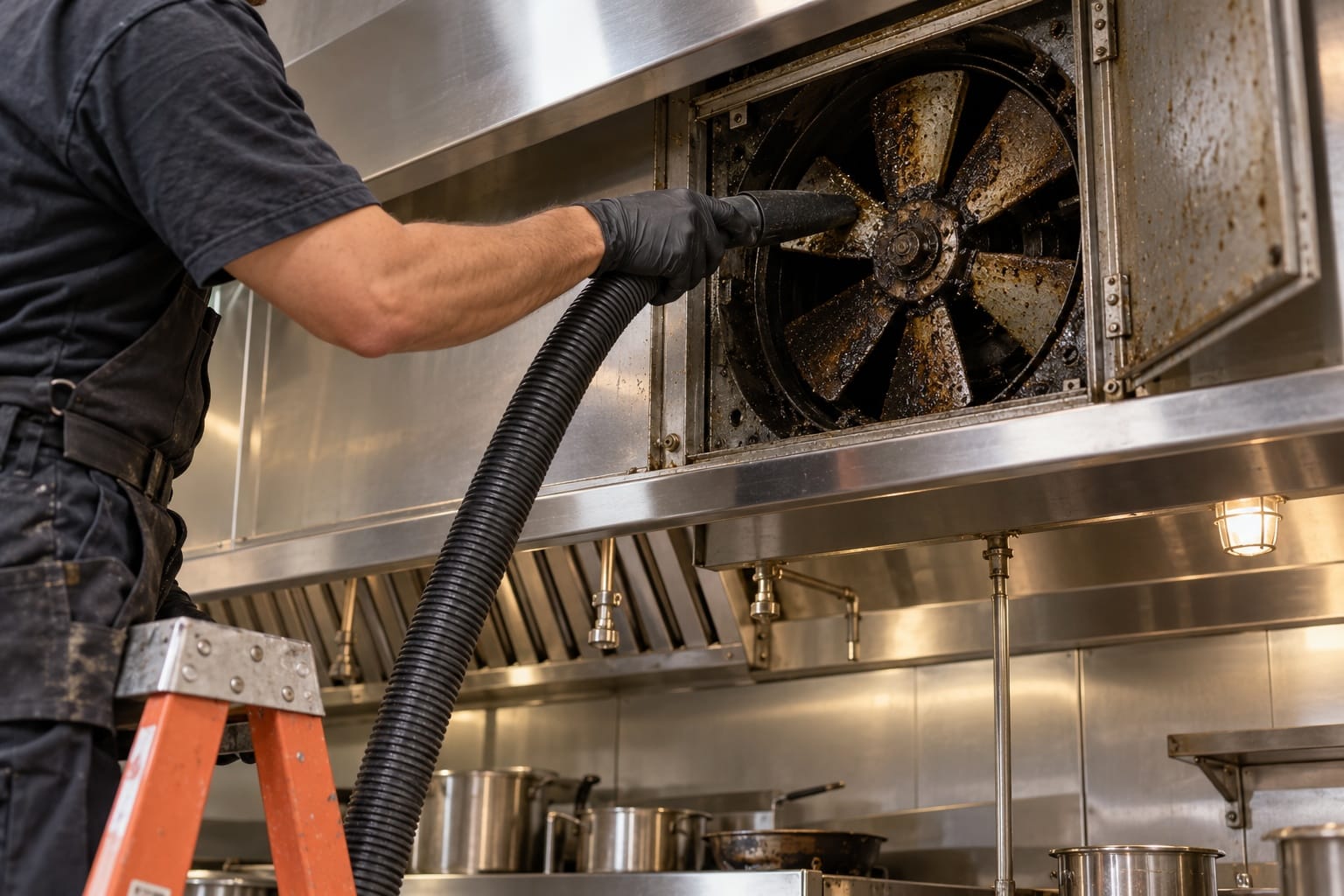
Every restaurant owner asks the same question eventually: how often does my kitchen hood actually need to be cleaned? The honest answer is that it depends on what you cook and how much — but there's a standard that gives you a floor, and there are local codes and insurers that can push it higher. Here's what you need to know to set a schedule that keeps your kitchen safe, your records straight, and your inspector happy.
What NFPA 96 Actually Says
NFPA 96 is the national standard for ventilation control and fire protection of commercial cooking operations. It sets minimum cleaning frequencies for hoods, grease removal devices (the filters), fans, and duct systems — and the frequency is tied to how the kitchen cooks, not a one-size-fits-all number. The standard's minimums are a floor, not a ceiling: many kitchens need more frequent service, and your local code or insurance carrier can require it.
How Your Cooking Determines the Schedule
The general framework works like this. Kitchens doing heavy or solid-fuel cooking — charbroilers, wood-fired ovens, woks, or operations that run long hours — build grease the fastest and need the most frequent cleaning, often monthly or at least quarterly. High-volume operations that cook continuously typically need service every few months. Lighter electric kitchens that cook in moderate volume can often run on a quarterly or twice-yearly schedule. The point is that the schedule should match your actual cooking load, not a calendar someone else picked for you.
Local Codes and Your Insurer
NFPA 96 is the baseline, but it's not the only voice in the room. Cook County and the local health and fire departments that inspect Oak Park, Forest Park, River Forest, and Berwyn kitchens can set their own expectations, and many insurance carriers require documented cleaning as a condition of coverage. That's why the written report matters as much as the cleaning itself: it's the proof your inspector and your insurer both want to see.
What Happens When You Skip It
Skip a cleaning once, and it's easy to skip it twice. But the buildup doesn't wait. Grease slows airflow, darkens the filters, and turns your ductwork into fuel for a fire you didn't plan for. It also costs you in efficiency: a grease-choked fan pulls more power and burns out sooner. One scheduled visit costs less than any emergency callout — and far less than a violation on your record or a claim your insurer has to pay.
How We Help You Set the Right Schedule
We don't hand you a generic calendar. We start with a walkthrough so we know your layout, your cooking volume, and your service history — then we recommend a schedule that fits how you actually cook, your insurer, and your local code. Every visit ends with a written report documenting what was cleaned and what needs watching, so your records stay straight and your next inspection is boring in a good way.
Not sure what schedule fits your kitchen? Call for a fast response and a free quote — we'll talk through it, no pressure, no obligation.